
Children's dentistry
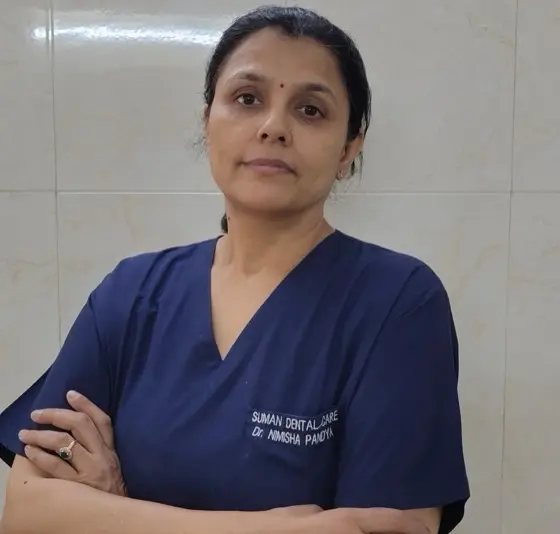
Children's dentistry covers check-ups, fluoride, fissure sealants, fillings for milk teeth and advice on brushing, diet and habits such as thumb sucking. At Suman Dental Care children are seen by Dr. Nimisha Pandya, a dental surgeon (BDS).
Step by step
8 adult teeth in, 4 likely wobbly, 16 milk teeth left. The first adult molars arrive behind the milk teeth at about 6.
Upper
Lower
- 1BeforePrepare your childAt home
Tell your child in simple words that the dentist will count their teeth. Avoid saying words like pain, needle or hurt.
- 2BeforeMeet the dentistVisit 1
Your child may sit on your lap. The dentist talks first, so your child can get used to the room and the chair.
- 3TreatmentLook and countVisit 1
Using a small mirror, the dentist counts the teeth and checks for spots, decay, gum problems and bite.
- 4TreatmentGentle cleanVisit 1
Teeth are cleaned with a soft brush, and fluoride varnish may be applied if suitable.
- 5AfterBrushing and diet adviceVisit 1
You are shown how to brush, how much toothpaste to use and which snacks and drinks to limit.
- 6AfterRegular check-upEvery 6 months
Short check-ups keep your child familiar with the clinic and find small problems early.
A short first visit, then a check-up about every 6 months. A filling or sealant adds one visit of 20–40 minutes when needed.
Milk teeth hold space for the adult teeth and help your child chew and speak. Decay in a milk tooth can cause pain and abscesses, and it can affect the adult tooth growing beneath it. A first visit by age 1 or when the first tooth appears is the usual advice, because habits and diet are easier to set early than to change later.
- A baby whose first tooth has appeared, or a child nearing age 1
- Brown or black spots, or white chalky lines on milk teeth
- A child who complains of pain, or avoids chewing on one side
- Thumb sucking, dummy use or mouth breathing past age 4–5
- A child of about 7 whose teeth look crowded or whose bite looks uneven
After a filling or a fluoride varnish, your child can usually eat after 1–2 hours, or once any numbness has worn off. Watch that a numb cheek or lip is not bitten.
Fluoride varnish should stay on the teeth for the rest of the day, so give soft food and avoid brushing until the next morning if your dentist advises it.
Call us if your child has swelling of the face, a fever with tooth pain, or pain that keeps them awake.
- Dental anxiety is the most common problem. A slow first visit with no treatment helps.
- Fillings in milk teeth can fail if the cavity was deep or the child eats sugary snacks often.
- Fluoride in excess causes white marks on adult teeth. Use only a smear of toothpaste up to age 3 and a pea-sized amount from 3 to 6, and do not let a child swallow it.
- A tooth that is already infected may need to be removed rather than filled.
What affects the cost
We don't publish prices online. After an examination you get a written estimate that lists each item.
- A gentle examination and a talk with you and your child
- X-rays only when needed
- Cleaning and, if suitable, fluoride varnish
- Fissure sealants for suitable back teeth
- Advice on brushing, diet and habits
Questions patients ask
When should my child first see a dentist?
Mainstream guidance is by age 1, or when the first tooth appears. The first visit is short and is mainly to look, count the teeth and talk about brushing and feeding. Read your child's first dental visit.
Do milk teeth need fillings if they fall out anyway?
Yes. A decayed milk tooth can hurt, can form an abscess and can affect the adult tooth underneath. Some milk molars stay until age 10–12.
What is a fissure sealant?
A thin protective coat painted over the grooves of back teeth where food and bacteria collect. It is not drilled and needs no injection. It is checked at each visit.
Should my child use fluoride toothpaste?
Yes. From the first tooth, brush twice a day with a smear of fluoride toothpaste, about the size of a grain of rice, until age 3, then a pea-sized amount until age 6. An adult should help or supervise.
How do I stop thumb sucking?
Most children stop by themselves between 2 and 4. If it continues past 4–5, it can push the front teeth forward. Praise works better than punishment, and your dentist can suggest options.
When should braces be assessed?
An orthodontic assessment can be done around age 7, when the first adult molars and front teeth have come in. Most children do not need treatment at that age. See orthodontic treatment for how this works.
Questions about this treatment?
Send a WhatsApp message or book an examination. The dentist explains the options before anything starts.